Cool homes for the Indian summer.
Built around how heat, light and air actually move through a building in Jammu — not imported from a European brochure. Passive first, mechanical last, local always.
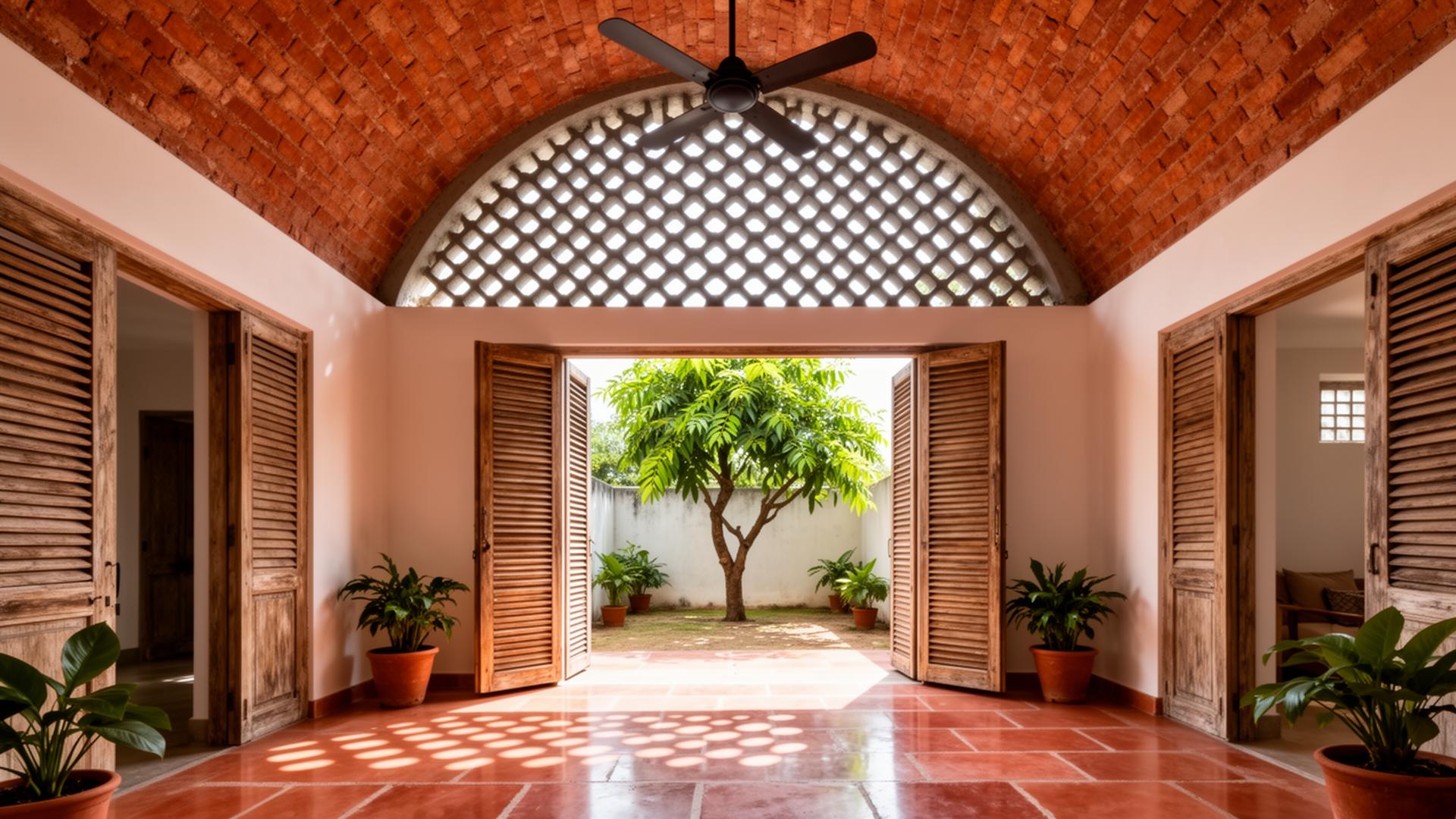
Built for 45°C, not 25°C
Deep chajja overhangs, jali screens, shaded courtyards and cross-ventilation keep interiors 6–10°C cooler than the street, before a single AC switches on.
Low operating energy
High-performance envelope, light-coloured roofs, insulated terraces and well-sized openings cut cooling load by 40–60%. Lifetime bills, not just first cost.
Local materials
Dholpur and Jaisalmer stone, Jammu lime, fly-ash brick, sustainably sourced regional timber, kota and terrazzo flooring. Lower transport carbon, longer life.
Six strategies, layered for the Jammu climate.
Orientation & massing
Long axis east–west. Habitable rooms face north. Service rooms buffer the hot western face.
Shading layer
Chajja, brise-soleil, jali screens and pergolas cut direct solar gain on glass by up to 80%.
Thermal mass
Stone, brick and lime plaster absorb daytime heat and release it slowly after sunset.
Cross-ventilation
Openings sized and aligned so that night breezes purge stored heat without mechanical assistance.
Cool roof + insulated terrace
Reflective finishes, broken china terrazzo or planted terraces drop top-floor temperatures dramatically.
Courtyards & water
A shaded central court and a small water body create a micro-climate that pulls air through the plan.
LEED, IGBC and GRIHA — designed in, not bolted on.
We treat green-rating frameworks as a checklist for good engineering, not a marketing sticker. Where you want certification, we will design and document for it from the concept stage — energy modelling, daylight studies, water-balance calculations, material disclosures, and a clean submission package.
Internationally recognised. Used for commercial and institutional work targeting export-grade ratings.
India-context ratings for homes, offices, schools and townships.
National rating system aligned with Indian climate zones, water scarcity and material supply chains.
We hand you numbers, not adjectives.